Okinawa Budo Kaisai · Shorei-Kan
Kaisai-do
An Okinawan budo for understanding the kata, not for competing.
What it is · 尚礼館
Kaisai means uncovering the techniques the kata keeps hidden.
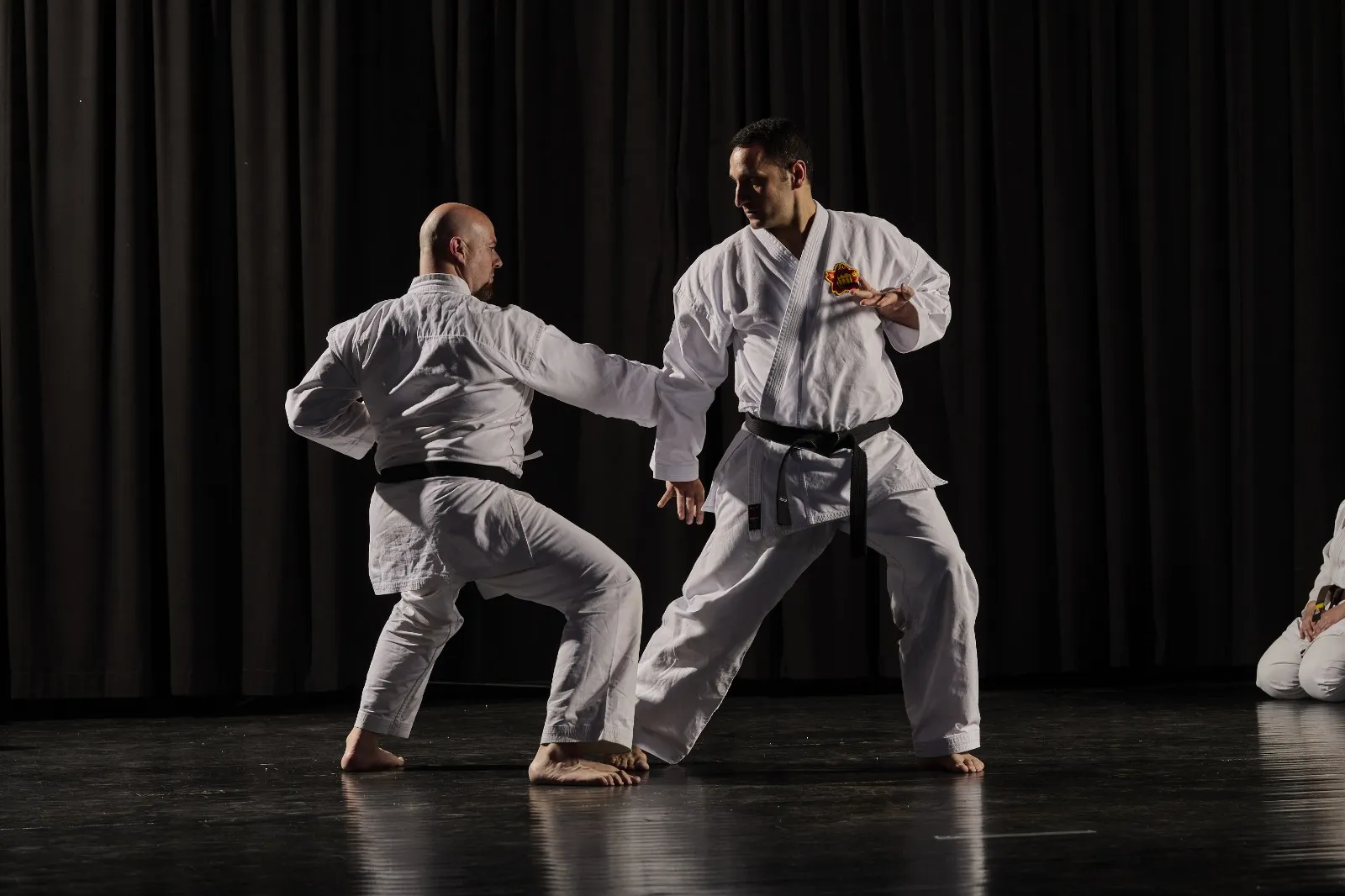
Okinawa Budo Kaisai-do is the full name of what we practise. Every classical kata hides techniques that cannot be seen at first glance; the work of Kaisai is to bring them to light, study them with a partner and make them your own.
For decades it was called karate. Today the school prefers the word Budo: nobody competes here — you walk a path.
- Kata
- Bunkai
- Kumite
- Hojo Undo
The pillars
Three pillars. No scoreboard.
-
Kata
The forms handed down by the Okinawan masters. Not a choreography, but a text you learn to read.
-
Bunkai
The kata performed by two people. Every movement makes sense in front of a partner.
-
Kumite
Partner practice, from the agreed to the free, with a method that lets you learn without getting hurt.
-
No competition
No trophies, no rivals. You train to understand, to look after your body and to practise for a lifetime.
«You move on when you understand, not when it is your turn.»
Origin
A root in Okinawa
Heir to Okinawan Goju-ryu. It passed from Higaonna Sensei to Miyagi Sensei, and from him to Toguchi Sensei, who opened the first Shorei-Kan dojo in Koza in 1954. In 1982 Saiko Shihan Tamano brought it to Europe.
See the full lineage →- Naha-te Higaonna Sensei
- Goju-ryu Miyagi Sensei
- Koza · 1954 Toguchi Sensei
- Europe · 1982 Saiko Shihan Tamano

The door is open.
Find a dojo near you or write to us. The first class is the first step on the path.